You do not need special gear to make good tea
We hear this at markets all summer. Someone picks up a bag of loose leaf, gets excited, then puts it back down. Why? "I don't have a strainer." People went without one for about four thousand years. You already have everything you need at home.
Loose leaf tea is dried leaves. Add hot water, wait, then separate the leaves from the liquid. That last step is the only reason anyone buys an infuser, and there are five easy ways to handle it without one. I'll walk through all of them with real numbers, hot and iced. It is August 31 in Louisville and nobody wants a steaming mug at 92 degrees.
Grab a mug.
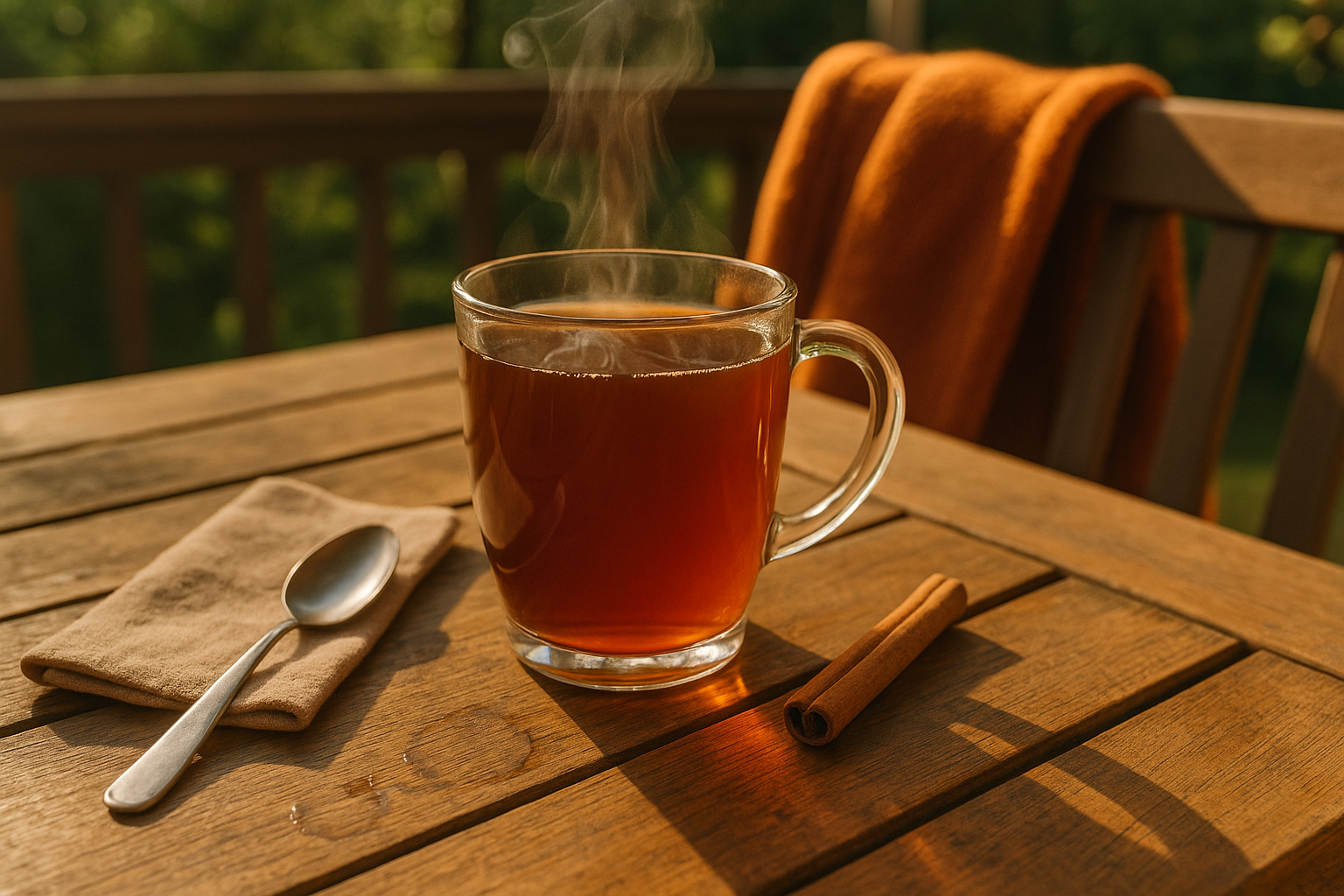
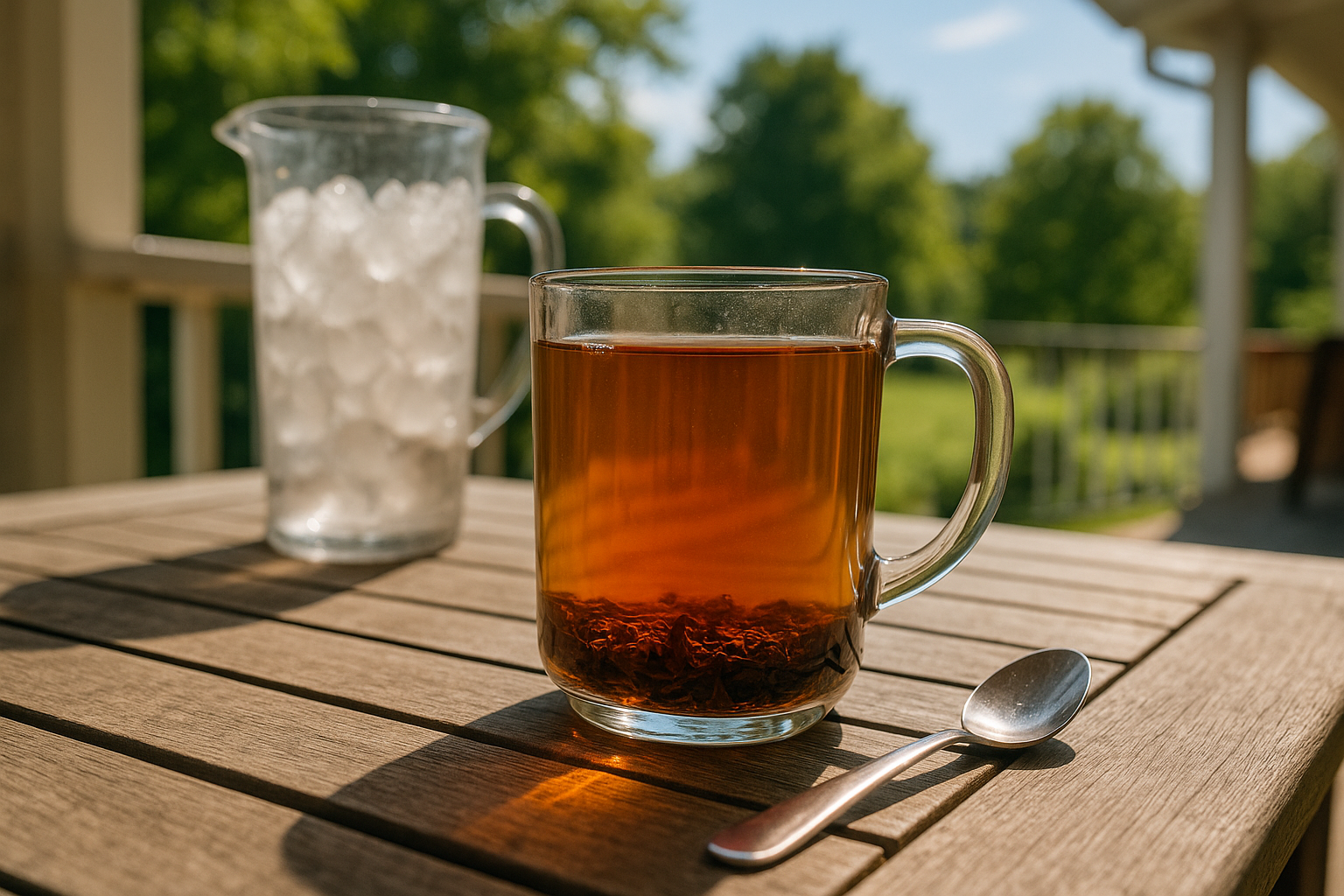
The simplest method: mug and spoon
We teach this one first because it needs zero equipment. Some people call it "grandpa style." It's great.
How to do it
- Put 1 rounded teaspoon of loose leaf into an 8oz mug. For a 12oz mug, use 1.5 teaspoons.
- Pour hot water over the leaves at the right temperature for your tea. More on that below.
- Steep for the recommended time.
- Drink around the leaves. Most sink or drift to one side, so you sip from the other.
The part people miss: you never remove the leaves, so you have to stop the steep some other way. With big-leaf teas, drink it down before it turns bitter, then top off the same leaves with fresh hot water. A good black tea or oolong gives you two or three cups this way, and each one tastes a little different. Nice way to spend a slow morning.
The catch: fine-cut blends and anything with tiny bits, like a fruity herbal with chopped hibiscus and rosehip, will give you a mouthful of sediment. For those, keep reading.
The spoon-and-fork strain (our favorite no-gear trick)
Say you steeped grandpa style but don't want to chew leaves. Simple. Steep in one mug, then pour into a second mug while holding a regular fork or spoon across the lip to catch the leaves.
A fork with tines close together catches most big leaves. A slotted spoon does even better. For fine blends, a regular spoon held flat against the rim works surprisingly well if you pour slowly and stop before the last half-inch, where the sediment settles.
The two-mug pour, step by step
- Steep your tea loose in Mug A for the full time.
- Hold a fork or spoon across the rim of Mug A.
- Pour slowly and steadily into Mug B.
- Stop when you hit the murky last inch. Toss those dregs or compost them.
You'll lose a sip or two to the dregs. That's the tax for using no equipment. Worth it.
Cheesecloth, a clean cloth napkin, or a paper towel
Want a cleaner cup? A scrap of cheesecloth, a thin cotton napkin, or a coffee filter does the job.
Steep the tea loose, then pour it through the cloth laid over your serving cup. A coffee filter catches everything down to the fine dust, but it pours slow, so give it a minute. A paper towel works in a pinch but tears when it gets heavy, so pour in stages.
One warning. Cloth and paper grab a little flavor and oil from the tea, especially with chocolatey or oily blends. You won't notice on most cups, but a rich blend loses a touch of body. For a lighter green or a fruity herbal, it's invisible.
The French press hack
Own a French press for coffee? You already own a tea maker. It's one of the best no-strainer tools around, because the mesh plunger does the separating for you.
- Add 1 rounded teaspoon of tea per 8oz of press capacity.
- Pour in water at the right temperature.
- Steep for the recommended time with the plunger up.
- Press down slowly and pour.
One tip: don't let the tea sit on the pressed leaves. It keeps extracting and turns bitter. Pour it all into a mug or pitcher when the timer goes off. And rinse the press well, since tea and coffee trade flavors.
Temperature matters more than gear
Beginners skip this, and it matters far more than whether you own an infuser. Different teas want different water temperatures. Too hot on a delicate tea and you get bitterness no strainer can fix.
No thermometer? Boil your water, then let it sit and cool. Rough guide:
- Black tea: full boil, 212 degrees. Steep 3 to 5 minutes. Covers our bold blends like Blood Orange, Dirty Chai, and Mr. Tea's Southern Tea.
- Oolong: around 195 degrees, so boil then wait about a minute. Steep 3 to 5 minutes.
- Green tea: around 175 to 180 degrees, so boil then wait 3 to 4 minutes. Steep just 2 to 3 minutes. Boiling water scorches green tea and turns it grassy and harsh.
- White tea: around 175 degrees. Steep 4 to 5 minutes. Gentle leaf, gentle water.
- Herbal and rooibos: full boil, 212 degrees. Steep 5 to 7 minutes. These are tough and want hot water and time. Most of our fruity blends live here.
The single most common beginner mistake is pouring boiling water on green tea, then wondering why it's bitter. It's not your gear. Your kettle is too hot.
Iced tea with no strainer (the Kentucky August method)
Let's be honest about the season. This is the tail end of a long, sticky Louisville summer, and hot tea is not happening on the back porch right now. Good news: iced tea is even more forgiving of the no-strainer life, since most methods separate the leaves for you.
Hot-brew then pour over ice
Fastest way, and great when someone asks for tea and you want it in five minutes.
- Use double the leaf you normally would, so 2 teaspoons per 8oz of finished tea. The extra strength makes up for melting ice.
- Steep hot, at the right temperature and time for your tea type.
- Strain with any method above, then pour the hot concentrate straight over a tall glass of ice.
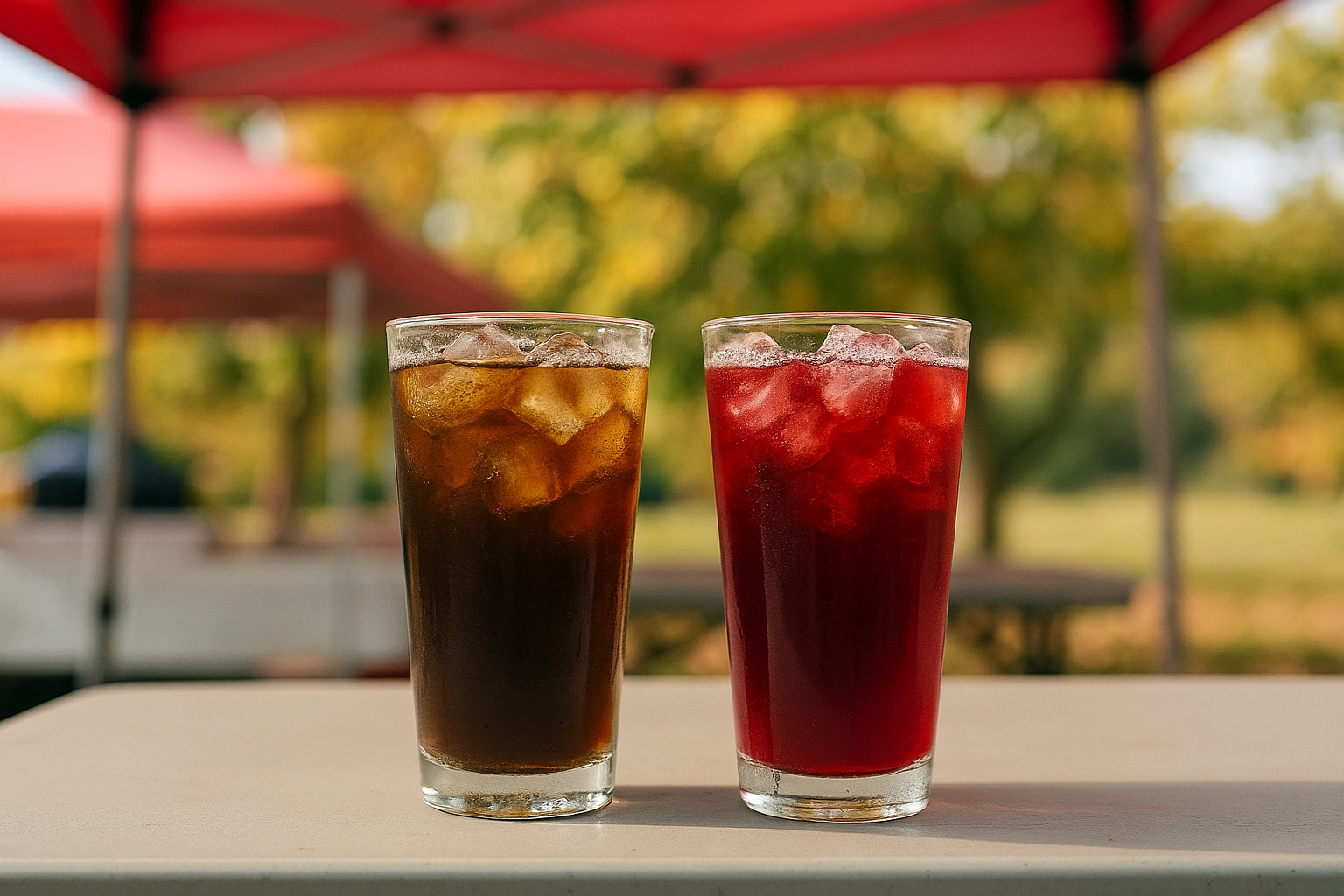
The ice does two jobs. It cools the tea and dilutes your extra-strong brew down to right. Fruity herbals like Teana Colada or Bangin' Berry are made for this and brew up a beautiful red from the hibiscus.
Cold brew (the laziest, maybe the best)
Cold brew barely needs technique and comes out smooth with little bitterness. No hot kettle in an already hot kitchen, either.
- Put 1 tablespoon of loose leaf per 2 cups of cold water in a pitcher or jar.
- Cover and put it in the fridge for 6 to 12 hours. Overnight is easy.
- Strain the leaves with a fork over the pitcher, or a cloth, or just pour the tea off the top and leave the settled leaves behind.
Since it never gets hot, cold brew pulls far less bitterness and less caffeine, so it comes out sweeter and softer. Our black teas like Mr. Tea's Southern Tea were made for a cold brew pitcher, which is why we sell them as gallon bags. You can shop the whole lineup on the shop page if you want to stock up for the last few weeks of pool weather.
Measurements without a scale
You don't need a scale. A tablespoon and a teaspoon get you close enough. Here's the cheat sheet we hand people at the cart:
- 8oz hot cup: 1 rounded teaspoon of leaf.
- 12oz hot cup: 1.5 rounded teaspoons.
- Any iced tea (hot-brew method): double it. 2 teaspoons per 8oz of finished tea.
- Cold brew pitcher: 1 tablespoon per 2 cups of water.
One note on fluffy versus dense teas. A light, leafy blend full of flowers and big fruit chunks takes up more spoon space than a dense, rolled tea. When in doubt, a slightly heaping teaspoon of a fluffy blend and a level teaspoon of a dense one land in about the same place. Trust your taste. Too weak? Add more leaf next time. Too strong? Steep less or use a hair less leaf.
What to do with the leaves afterward
Two good options. First, resteep them. Most quality teas give you a second and even third cup. Add a minute to the steep each round, since the leaves have already given up their easy stuff. Black teas, oolongs, and greens all resteep well. Fruity herbals usually give one strong steep and then fade, so don't expect miracles from round two.
Second, compost them. Used tea leaves are high in nitrogen and go straight into a compost bin or garden bed. Skip anything with candy sprinkles or added sugar bits. Those don't belong in the pile.
Frequently asked questions
Can I really brew loose leaf tea without a strainer or infuser?
Yes, easily. Steep the leaves loose in your mug or pitcher, then separate them by pouring through a fork, a spoon, cheesecloth, a coffee filter, or a French press plunger. You can even skip separating and drink around the leaves, the way tea has been enjoyed for centuries.
What can I use instead of a tea infuser?
A fork or slotted spoon held across the rim while you pour, a clean cloth napkin, a coffee filter, cheesecloth, or a French press all work. For iced tea, cold brewing in a jar lets the leaves settle to the bottom so you barely need to strain.
Will the tea leaves get stuck in my teeth?
Only if you drink loose leaves without straining, and even then large-leaf teas mostly stay put at the bottom of the cup. With a fruity blend full of fine bits like chopped hibiscus, strain through a fork or filter first and you won't chew a single leaf.
How much loose leaf tea do I use per cup?
Use 1 rounded teaspoon per 8oz cup, or 1.5 teaspoons for a 12oz cup. For iced tea made by the hot-brew method, double it to 2 teaspoons per 8oz so melting ice doesn't water it down. For a cold brew pitcher, use 1 tablespoon per 2 cups of cold water.
Is cold brew tea weaker than hot tea?
It has less caffeine and less bitterness because cold water pulls flavor out slowly, but it isn't weak. Cold brew tastes smoother and a little sweeter. Want it bolder? Steep it longer or add more leaf to the jar.
Come see us and skip the guesswork
If you'd rather taste before you brew, find the tea cart around Louisville or say hi on the events page to see where we'll be. Planning a wedding or a shower and want us to pour for your guests? Reach out through our contact page. Either way, don't let a missing strainer keep you from good tea. A fork and a mug are plenty.
thirsty yet?
Sip What We Write About
Every tea on the blog is brewed from the loose leaf we sell. Louisville pickup or shipped to your door.
Shop Loose Leaf TeaRyan Harris
Owner of The Real Mr. Tea, a Louisville loose leaf tea shop and mobile tea cart pouring at markets, weddings, and events across Kentucky. Every tea on this blog is one he blends, brews, and sells himself.
Get to know Mr. Tea